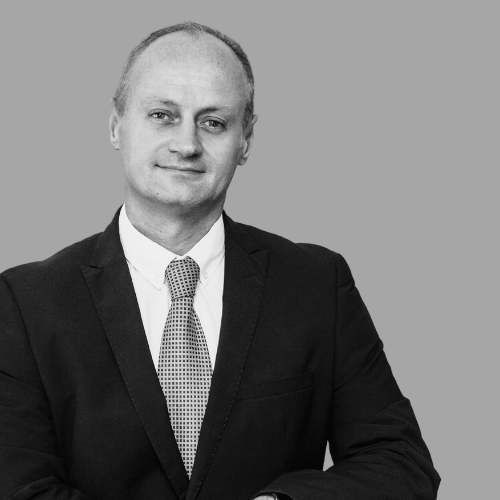
In an interview recently, Ryan van Niekerk chatted to Ismail Momoniat. He is technical advisor to the National Treasury, and he was the head of the team for removing South Africa from the Grey List & Ninety-One CEO Hendrik du Toit. Below excerpt from that interview, on the radio station RSG.
This marks a significant milestone in South Africa’s journey back to financial prosperity.
We ended last week with very good news – that the Financial Action Task Force, FATF, has removed SA from its so-called grey list. This body is an international watchdog against money laundering and the funding of terror.
It was only in 2023 that South Africa was placed on the list because of 22 substantial failures in South Africa’s ability to prevent money laundering and the funding of terrorism. These shortcomings largely related to inadequate regulatory frameworks and legislation to quickly identify and then prosecute crimes. This required an inter departmental task team to resolve.
The team was an interdepartmental committee because, when it comes to greylisting, it covered many issues.
It had the National Prosecuting Authority (NPA), the Hawks, the DPCI [Directorate for Priority Crime Investigation], the FIC [Financial Intelligence Centre], the SIU [Special Investigating Unit]; it had the CIPC [Companies and Intellectual Property Commission], the Master’s Office, the Department of Justice, it had your Prudential Authority from the Reserve Bank and also the exchange-control people from the Reserve Bank, as well as the FSCA [Financial Sector Conduct Authority] and Sars [South African Revenue Service].
There were dark clouds around South Africa, which threatened the delisting.
The changes that were made or the interventions that got us off the list mainly relate to legislative and regulatory reform. The key now would be enforcement. Examples here would be the story of the capture of the Tembisa Hospital and some of the tenderpreneurs, their buying cars costing R50 million. We see the killing of Babita Deokaran, who was a whistleblower.
It is about implementation and enforcement. And yes, all getting off the grey list indicates is that we’ve begun to tackle our problems; that in 2019 to 2021 our system of implementation was almost non-existent after the state capture years.
Now what it indicates is we’ve begun to develop it. We are certainly nowhere near where it should be, and the challenge is that we continue to strengthen our system.
We have a mutual evaluation again next year and in 2027, and we are going to have to demonstrate that we continue to improve as we exit graciously, because if we don’t, we could well get back to being greylisted. That’s going to be the challenge that we face.
Ongoing risks:
Corruption is very extensive and entrenched in our country, especially in the procurement system. We’re going to have to do a lot more to begin to reduce it, then to stop it.
We have to have in place stronger preventive controls so that it doesn’t happen. And to the extent that it does happen, then we’re going to have to be able to have enforcement acting very quickly.
The worst lesson to learn from exiting the grey list is to think, it’s all now well and good, and we comply and we become complacent.
We’ve got to strengthen our institutions too and, not to do it for FATF for the coming mutual evaluation.
We have to do it for ourselves, for our country and our people, because corruption and financial crimes have increased significantly and much more needs to be done for us to reduce and stop it.
The benefits of this remaining in place.
To the extent that we’re deemed to have fixed up our system and our authorities are working, we can actually lower the costs of correspondent banking. And if people have more faith in our system, that it is not prone to money laundering and dirty money, we will reduce the cost and that will have a good impact on trade and on investment.
It may take us six to 12 months or perhaps two years where we will see the beneficial effects and we need to just continue to demonstrate improvements.