Morningstar argues that investors need to move away from building portfolios around a single forecast and instead adopt a more probabilistic approach to making decisions. Mike Coop, Morningstar’s chief investment officer for EMEA, says the current investment ecosystem is not merely unpredictable and volatile but structurally harder to predict, making traditional forecast-led strategies increasingly fragile. Rather than trying to identify one most likely outcome, investors should consider a range of possible futures and assess how their portfolios might perform under each. This shifts the emphasis from being “right” about the future to being prepared for uncertainty. In this context, risk is not only about volatility or market drawdowns, but also about the danger of constructing portfolios that depend too heavily on one scenario that may never occur.
Coop stresses that geopolitics and technology are two powerful forces that make markets more difficult to read. The shift away from a rules-based, multifaceted world towards a more fragmented and volatile geopolitical landscape means that decisions by just a few major political leaders can have significant effects across the markets, currencies and commodities. At the same time, advances in artificial intelligence are rapidly reshaping competitive advantages across industries, creating uncertainty about which companies will benefit and which may be disrupted. These changes compress timelines, weaken how useful traditional models are and make it more difficult for investors to base their decisions on stable assumptions about the future.
Despite these challenges, Morningstar sees uncertainty as a source of opportunity for investors willing to be disciplined. Market disruption often leads to mispricing, and volatility can create attractive entry points for those able to take a long-term view rather than react to every short-term movement. To benefit, investors need broader research across geographies, sectors and asset classes, as value is increasingly found by comparing opportunities across a wider universe rather than focusing narrowly on individual securities. Coop also stresses the importance of humility: investors must recognise their biases, test ideas rigorously, consider alternative viewpoints and rely on a strong decision-making process. In his view, the advantage in ever shifting markets comes less from having stronger convictions and more from having better frameworks for managing uncertainty.
Morningstar has urged investors to rethink portfolio construction, arguing that as markets are increasingly uncertain, strategies cannot be based on a single forecast or expected outcome.
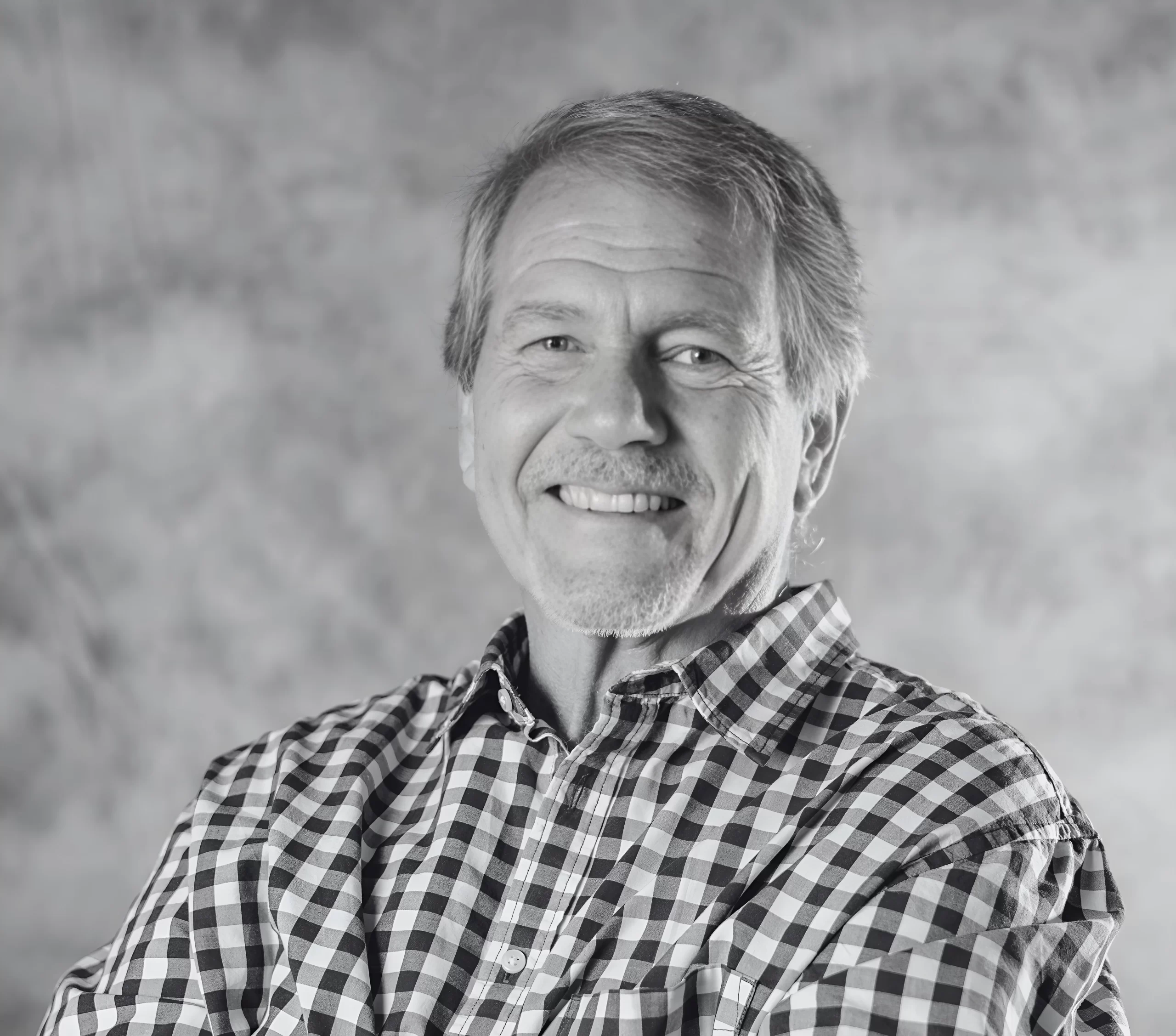
According to a recent media release, Morningstar’s chief investment officer for EMEA, Mike Coop (pictured above), said there needs to be a shift away from forecast-driven investing towards a more probabilistic mindset.
‘Rather than constructing portfolios that perform well under one expected outcome, the goal is to build portfolios that can withstand a range of possible futures. This does not eliminate uncertainty, but it does provide a framework for managing it more effectively,’ Coop told a recent investment forum, according to the release.
He said the investment environment is not just volatile, but structurally harder to predict and too uncertain to be overly reliant on predictions and forecasts.
Thus, rather than anchoring on one scenario, investment professionals must consider multiple scenarios and probabilities, he said.
This is a fundamental change in approach.
Rather than trying to predict what’s most likely to happen, investors must consider a range of outcomes – and how portfolios behave under each. ‘The focus shifts from being right to being prepared,’ Morningstar said.
This has important implications for how risk is understood.
‘Risk is no longer just volatility or market drawdowns, but the danger of building portfolios that are overly dependent on a single outcome that may not materialise,’ it said.
Rapid change
Coop discussed two major forces that are reshaping markets and making it increasingly difficult to anchor investment decisions on a single view of the future: geopolitics and technology.
The geopolitical shift away from a rules-based, multilateral system towards a more fragmented world has increased the influence of political decision-making on financial markets. ‘We’ve moved to a world where decisions by a small number of leaders can move markets significantly – equities, bonds, currencies, commodities.’
This introduces unpredictability that’s difficult to model with traditional economic frameworks.
Meanwhile, AI advances are accelerating the pace of change across industries, compressing timelines and creating uncertainty around future winners and losers, he said.
‘What these technologies can do is very rapidly shifting competitive advantages, stripping some businesses of theirs and building up powerful barriers for others,’ Coop said.
Opportunity in uncertainty
Coop said this environment, while challenging, is not without opportunity.
Periods of uncertainty and disruption often lead to mispricing as markets react to new information. These dislocations can create entry points for investors able to take a longer-term view, he said.
‘The movements in markets are large, and that creates opportunities.’
Volatility, while uncomfortable, can allow investors to acquire assets at more attractive valuations than would otherwise be available. The challenge lies in identifying which opportunities are meaningful and avoiding the temptation to react to every market movement, he said.
Broaden research
However, investors need access to a wide range of insights to navigate this environment and increase the likelihood of finding mispriced opportunities.
Coop said broadening the research universe across geographies, asset classes and sectors was important to uncover opportunities.
‘This reflects a shift in where value is created. Increasingly, it’s less about selecting individual securities within a narrow universe and more about identifying relative value across a much wider set of opportunities,’ Morningstar said.
Humility is essential
Coop also said there is a need for humility in decision-making, adding that in an environment where outcomes are harder to predict, conviction alone is not enough.
‘We’re all human, we all have biases,’ he said, indicating that investors need structured processes that challenge assumptions and improve decision-making.
This includes testing ideas rigorously, considering alternative viewpoints and ensuring decisions aren’t driven by overconfidence or incomplete information.
For Coop, the advantage lies not in having stronger views, but better processes.